
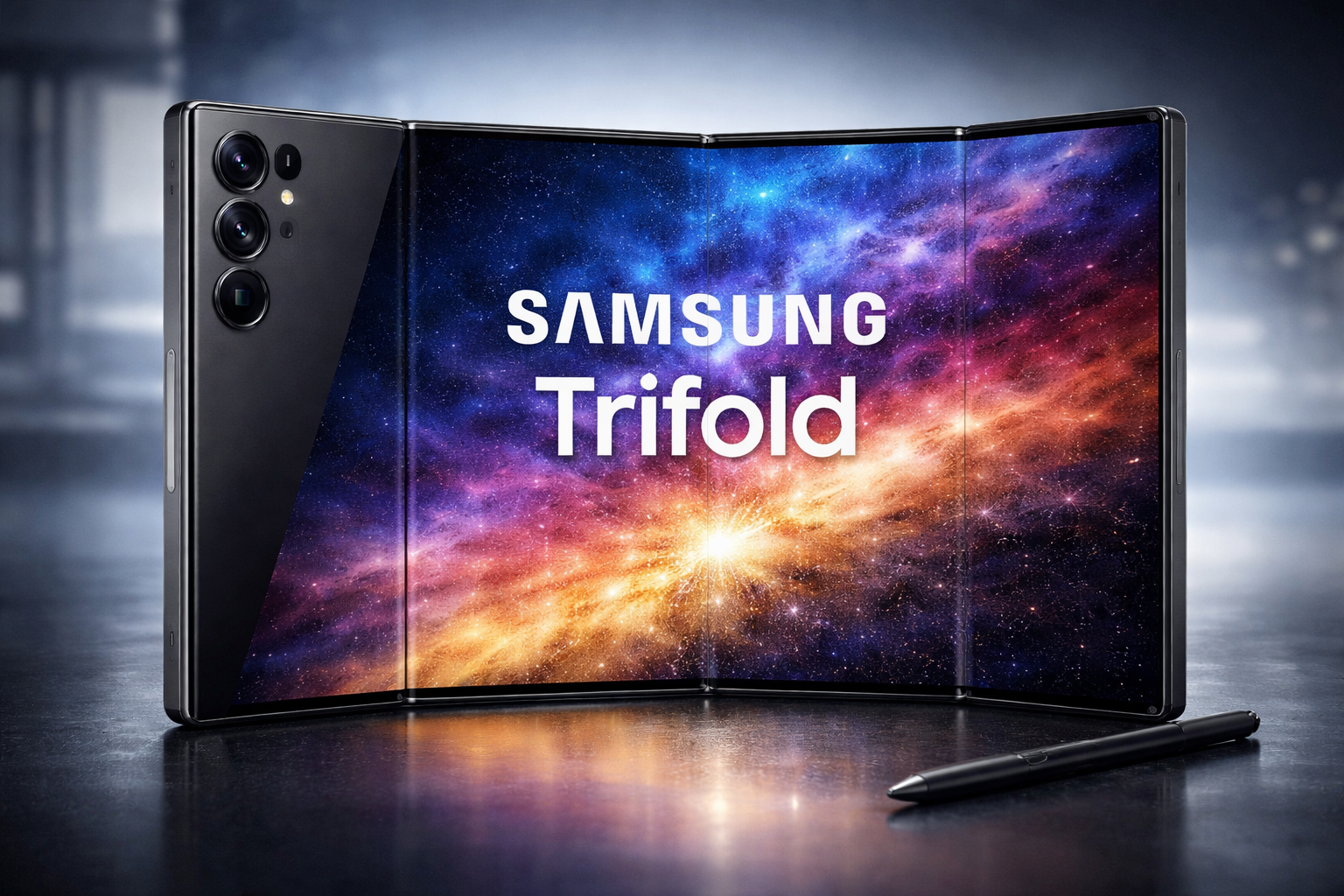
Foldable smartphones have moved from experimental concepts to mainstream premium devices in just a few years. Samsung has been at the center of this evolution, leading the market with its Galaxy Z Fold and Galaxy Z Flip series. Now, attention is shifting toward a new and ambitious concept: the Samsung Trifold.
The idea of a trifold smartphone—one that folds in three sections instead of two—represents a potential leap forward in mobile design, productivity, and display technology. While Samsung has not yet officially released a consumer-ready trifold phone, patents, prototypes, and industry signals strongly suggest that the company is actively exploring this form factor.
This in-depth guide explains what the Samsung Trifold is, how it works, why it matters, and what users can realistically expect, based on current information and industry trends. Whether you are a tech enthusiast, business user, or everyday smartphone buyer, this article provides a clear, neutral, and practical understanding of Samsung’s trifold ambitions.
Disclaimer: This article is for informational and educational purposes only. Product names, specifications, features, and release timelines are subject to change. Always refer to official Samsung announcements and documentation for confirmed details.
Table of Contents
What Is the Samsung Trifold?
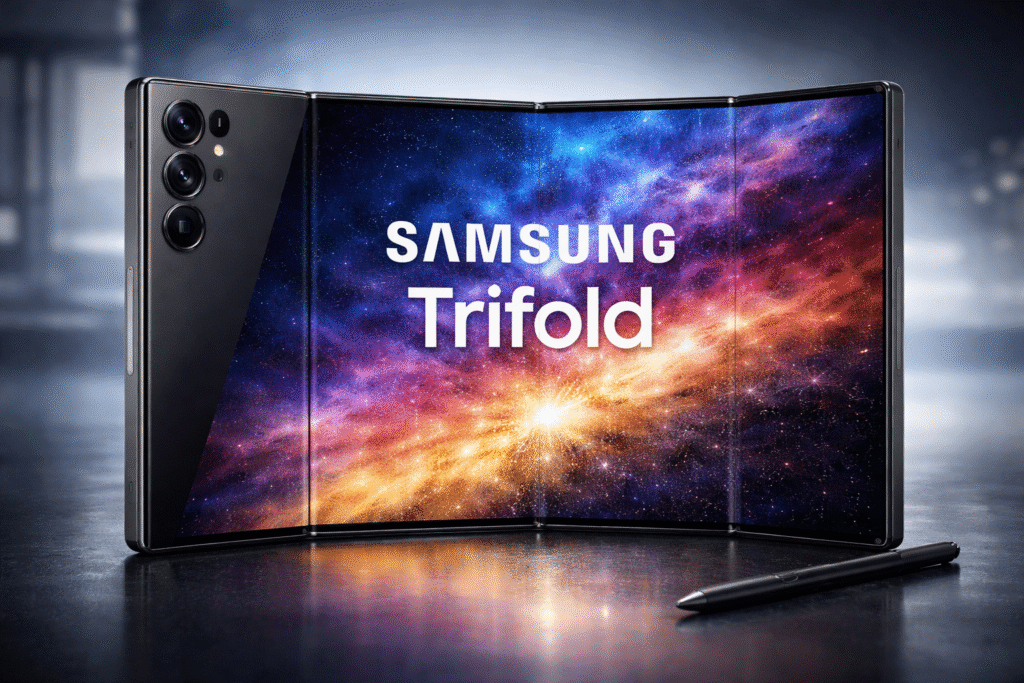
The Samsung Trifold refers to a foldable smartphone or device concept that uses three connected display panels joined by two hinges. Unlike traditional foldable phones that open like a book with a single fold, a trifold device can expand into a much larger screen while still folding down into a compact form.
How a Trifold Design Differs From Current Foldables
Most foldable smartphones today fall into two categories:
- Clamshell foldables (e.g., Galaxy Z Flip)
- Book-style foldables (e.g., Galaxy Z Fold)
A trifold design introduces an additional folding section, allowing:
- A larger unfolded display
- More flexible usage modes
- New multitasking possibilities
This design could blur the line between smartphones and tablets even further.

Why Samsung Is Exploring Trifold Technology
Samsung’s interest in trifold devices is driven by several strategic and technological factors.
1. Leadership in Foldable Innovation
Samsung has invested heavily in foldable displays for over a decade. Expanding into trifold designs allows the company to:
- Maintain leadership in premium devices
- Differentiate from competitors
- Showcase advanced display engineering
Trifold technology reinforces Samsung’s reputation as an innovator rather than a follower.
2. Demand for Larger Screens Without Larger Phones
Consumers increasingly want larger displays for:
- Productivity tasks
- Media consumption
- Multitasking
A trifold device offers tablet-sized screen real estate while remaining pocketable when folded.
3. Advancements in Flexible Display Materials
Recent improvements in:
- Ultra-thin glass (UTG)
- Flexible OLED panels
- Hinge durability
make trifold devices more feasible than in previous years.
How the Samsung Trifold Could Work
While Samsung has not finalized a public design, patents and prototypes suggest several possible configurations.
Inward-Folding Trifold Design
In this approach, the display folds inward twice, protecting the screen when closed.
Potential advantages:
- Better screen protection
- Reduced scratch risk
- Cleaner exterior design
Challenges include:
- Complex hinge engineering
- Increased thickness when folded
Outward-Folding Trifold Design
Here, at least one section of the display folds outward.
Potential advantages:
- Larger usable screen without unfolding fully
- Fewer internal layers
Potential drawbacks:
- Exposed display surfaces
- Higher durability requirements
Hybrid Trifold Mechanisms
Some concepts combine inward and outward folding to balance usability and protection. Samsung has patented multiple hinge approaches, indicating ongoing experimentation.
Display Technology Behind the Samsung Trifold
The display is the most critical component of any trifold device.
Flexible OLED Panels
Samsung Display is a global leader in OLED technology. A trifold phone would likely use:
- Advanced flexible OLED panels
- High refresh rates (120Hz or higher)
- HDR support for improved visuals
Screen Size Possibilities
When fully unfolded, a Samsung Trifold could offer:
- A screen size approaching small tablets
- Seamless multitasking layouts
- Enhanced reading and media experiences
Folded modes may support partial display usage similar to current foldables.
Crease and Durability Improvements
One challenge with foldable displays is visible creasing. Samsung continues to refine:
- Hinge geometry
- Display layering
- Pressure distribution
These improvements aim to minimize crease visibility over time.
Potential Use Cases for the Samsung Trifold
The trifold form factor opens the door to new use cases that go beyond traditional smartphones.
Productivity and Multitasking
A larger screen enables:
- Three or more apps running side by side
- Desktop-like multitasking layouts
- Enhanced document editing
This could appeal to professionals and power users.
Entertainment and Media Consumption
The expanded display is ideal for:
- Watching videos and movies
- Gaming with immersive visuals
- Reading digital publications
A trifold device could replace both a phone and a tablet for some users.
Creative and Design Work
Artists and creators may benefit from:
- Larger canvas space
- Stylus support
- Split-screen reference workflows
Samsung’s existing support for stylus input suggests this could be a key focus.
Software Experience on a Samsung Trifold
Hardware alone does not define a great foldable experience. Software optimization is equally important.
One UI and Multiscreen Optimization
Samsung’s One UI already includes features such as:
- App continuity between folded and unfolded states
- Flexible window resizing
- Advanced split-screen modes
A trifold device would require further refinements to manage multiple screen segments seamlessly.
App Compatibility Considerations
Not all apps are optimized for foldable or expandable displays.
Samsung may address this by:
- Working with developers
- Providing layout guidelines
- Enhancing system-level scaling
This ensures a consistent user experience across apps.
Samsung Trifold vs Traditional Foldables
Understanding how a trifold compares to existing foldables helps clarify its value.
Key Differences
| Feature | Traditional Foldable | Samsung Trifold |
|---|---|---|
| Number of Folds | One | Two |
| Maximum Screen Size | Large phone / small tablet | Tablet-sized |
| Multitasking Potential | High | Very high |
| Design Complexity | Moderate | High |
Who Benefits Most From a Trifold?
- Business professionals
- Creative users
- Tech enthusiasts
- Early adopters
Casual users may find traditional foldables more practical and affordable.
Challenges Facing the Samsung Trifold
Despite its promise, the trifold concept faces real challenges.
Durability and Reliability
More hinges and folds introduce:
- Additional wear points
- Increased mechanical complexity
- Higher testing requirements
Samsung must ensure long-term durability to meet consumer expectations.
Thickness and Weight
Adding extra panels and hinges can result in:
- Increased folded thickness
- Heavier overall weight
Balancing portability with functionality is a key design challenge.
Cost Considerations
Advanced materials and engineering typically raise costs.
A Samsung Trifold would likely:
- Sit at the premium end of the market
- Target early adopters and professionals
Affordability may improve over time as production scales.
Battery Life and Power Management
Battery performance is critical for larger displays.
Battery Design in a Trifold Device
Samsung may use:
- Multiple battery cells distributed across sections
- Intelligent power management systems
- Adaptive refresh rates
These approaches help balance performance and efficiency.
Realistic Battery Expectations
While larger screens consume more power, software optimization can help maintain acceptable battery life for daily use.
Samsung Trifold and the Competitive Landscape
Samsung is not alone in exploring advanced foldables.
Industry Trends
Other manufacturers are also experimenting with:
- Multi-fold designs
- Rollable displays
- Expandable screens
Samsung’s advantage lies in its in-house display manufacturing and software ecosystem.
Market Impact
A successful Samsung Trifold could:
- Redefine premium smartphone expectations
- Influence competitor designs
- Accelerate innovation in flexible displays
Pros and Cons of the Samsung Trifold Concept
Pros
- Significantly larger display in a portable form
- Enhanced multitasking and productivity
- Strong potential for media and creative use
- Demonstrates cutting-edge display innovation
Cons
- Higher expected price point
- Increased design complexity
- Potential durability concerns
- May not appeal to all users
Release Timeline: When Could a Samsung Trifold Launch?
Samsung has not confirmed a release date.
What Industry Signals Suggest
Based on patent activity and prototype showcases:
- Development is active
- Commercial release may follow further refinement
- Initial availability could be limited
Samsung typically introduces new form factors cautiously to ensure reliability.
Frequently Asked Questions (FAQs)
Is the Samsung Trifold officially released?
No. As of now, it remains a concept supported by patents and prototypes.
Will the Samsung Trifold replace Galaxy Z Fold devices?
It is more likely to complement, not replace, existing foldables.
Will apps work properly on a trifold screen?
Samsung is expected to optimize software, but full compatibility depends on app developers.
Is the Samsung Trifold practical for daily use?
It may be ideal for power users, but casual users may prefer simpler designs.
Will the Samsung Trifold support a stylus?
While not confirmed, stylus support is a strong possibility based on Samsung’s ecosystem.
Best Practices for Evaluating Future Foldable Devices
If you are considering advanced foldables in the future:
- Assess your real-world usage needs
- Consider durability and support policies
- Evaluate software optimization
- Balance innovation with practicality
Not every user needs the most advanced form factor.
The Bigger Picture: What the Samsung Trifold Represents
The Samsung Trifold is not just a new device concept. It represents:
- The ongoing evolution of mobile computing
- A shift toward flexible, adaptive form factors
- The convergence of phones, tablets, and productivity tools
As technology matures, devices may become more adaptable to how people actually work and consume content.
Conclusion: Why the Samsung Trifold Matters
The Samsung Trifold highlights Samsung’s ambition to push the boundaries of what a smartphone can be. By exploring multi-fold designs, Samsung is addressing a growing demand for larger screens, better multitasking, and more versatile devices.
Key Takeaways
- The Samsung Trifold builds on Samsung’s foldable expertise
- It offers significant potential for productivity and media
- Design, durability, and cost remain key challenges
- It may redefine the premium smartphone category
While the Samsung Trifold is still emerging, its development signals an exciting future for foldable technology. For users who value innovation and adaptability, it represents a glimpse into the next stage of mobile device evolution.