
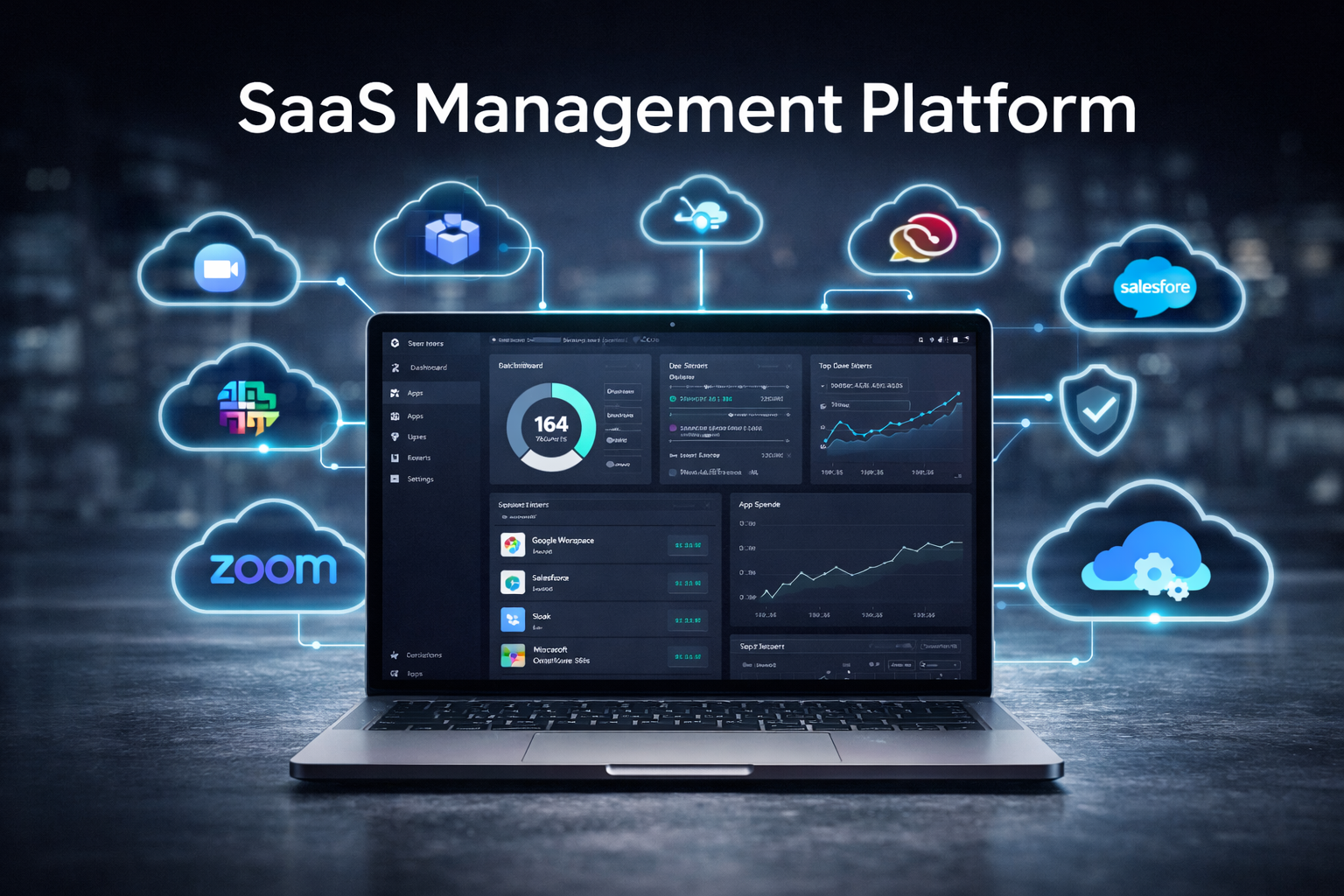
Software-as-a-Service has transformed how organizations operate. From collaboration tools and CRM systems to finance, HR, and security applications, modern businesses rely on dozens—often hundreds—of SaaS products to function efficiently. While this flexibility accelerates growth, it also creates new challenges around cost control, security, compliance, and visibility. This is where a SaaS management platform becomes essential.
This comprehensive guide explains what a SaaS management platform is, why it matters in 2026, how it works, and how organizations can choose and use one effectively. The content is designed for IT leaders, finance teams, security professionals, and business decision-makers seeking clear, practical, and trustworthy information.
Disclaimer: This article is for general informational and educational purposes only. It does not constitute legal, financial, or cybersecurity advice. Organizations should consult qualified professionals before making decisions related to SaaS governance, security, or spend management.
What Is a SaaS Management Platform?
A SaaS management platform (SMP) is a centralized system that helps organizations discover, manage, optimize, and govern their SaaS applications. It provides visibility into what software is being used, who is using it, how much it costs, and whether it complies with organizational policies.
Unlike traditional IT asset management tools, SaaS management platforms are designed specifically for cloud-based, subscription-driven software environments.
Core Objectives of a SaaS Management Platform
- Gain visibility into all SaaS applications
- Control and optimize SaaS spending
- Improve security and access management
- Support compliance and governance
- Reduce operational and administrative overhead

Why SaaS Management Platforms Matter in 2026
The rapid growth of SaaS adoption has created both opportunities and risks.
1. SaaS Sprawl and Shadow IT
Employees can easily sign up for SaaS tools without IT approval. Over time, this leads to unmanaged applications, duplicated tools, and security blind spots.
2. Rising SaaS Costs
Subscription-based pricing can hide inefficiencies such as unused licenses or overlapping tools. Many organizations overspend on SaaS without realizing it.
3. Security and Access Risks
Former employees retaining access, excessive permissions, and unmanaged integrations increase the risk of data exposure.
4. Compliance and Audit Pressure
Regulations and internal policies require organizations to know where data resides and who can access it.
A SaaS management platform addresses these challenges by providing centralized control and insight.
Key Functions of a SaaS Management Platform
Modern SaaS management platforms combine multiple capabilities into a single system.
1. SaaS Discovery and Inventory Management
The first step in SaaS management is knowing what applications exist.
Key discovery methods include:
- Integration with identity providers
- Expense and billing analysis
- API-based application discovery
- Browser and usage data analysis
This creates a centralized inventory of all SaaS tools in use.
2. License and Usage Management
Not all purchased licenses are actively used.
SaaS management platforms help organizations:
- Track license assignments
- Monitor actual usage levels
- Identify inactive or underutilized licenses
- Reclaim and reassign licenses
This directly supports cost optimization efforts.
3. SaaS Spend Management and Cost Optimization
Understanding SaaS spend is critical for financial control.
Typical capabilities include:
- Centralized subscription tracking
- Renewal and contract visibility
- Spend forecasting and reporting
- Identification of redundant tools
Finance and procurement teams use these insights to negotiate better contracts and reduce waste.
4. User Access and Lifecycle Management
Managing access throughout the employee lifecycle is a core function.
SaaS management platforms often support:
- Automated onboarding and offboarding
- Role-based access provisioning
- Deprovisioning of unused accounts
- Integration with identity and access management systems
This reduces security risk and administrative effort.
5. Security and Risk Management
SaaS applications store sensitive business data.
SaaS management platforms help improve security by:
- Identifying risky or non-compliant applications
- Monitoring third-party access and integrations
- Enforcing security policies
- Supporting access reviews and audits
This strengthens overall SaaS governance.
6. Reporting, Analytics, and Dashboards
Visibility is only valuable when it is actionable.
Most platforms provide:
- Executive dashboards
- Usage and spend reports
- Security and compliance summaries
- Custom reporting options
These insights support informed decision-making across IT, finance, and security teams.
Benefits of Using a SaaS Management Platform
Organizations that implement a SaaS management platform experience benefits across multiple areas.
Financial Benefits
- Reduced SaaS overspending
- Improved budget forecasting
- Better contract and renewal management
- Increased return on SaaS investments
Operational Benefits
- Centralized SaaS visibility
- Reduced manual administration
- Faster onboarding and offboarding
- Improved cross-team coordination
Security and Compliance Benefits
- Reduced shadow IT risk
- Improved access control
- Better audit readiness
- Stronger governance of sensitive data
SaaS Management Platform vs Traditional IT Asset Management
While both aim to manage software, they differ significantly.
Traditional IT Asset Management (ITAM)
- Designed for on-premises software and hardware
- Focused on ownership and depreciation
- Limited visibility into cloud subscriptions
SaaS Management Platform
- Built for subscription-based SaaS tools
- Focused on usage, access, and spend
- Provides real-time visibility and automation
For modern cloud-first organizations, SaaS management platforms are better aligned with current needs.
Key Features to Look for in a SaaS Management Platform
Not all platforms offer the same depth of functionality.
1. Comprehensive SaaS Discovery
Look for multiple discovery methods to capture both approved and unapproved applications.
2. License Utilization Insights
Accurate usage data is essential for cost optimization.
3. Integration Capabilities
The platform should integrate with:
- Identity providers
- HR systems
- Finance and procurement tools
- Security platforms
4. Automation and Workflows
Automation reduces manual effort and errors.
Examples include:
- Automated user provisioning
- License reclamation workflows
- Renewal alerts
5. Security and Compliance Controls
Ensure support for access reviews, policy enforcement, and audit reporting.
6. Scalability and Ease of Use
The platform should support organizational growth without becoming complex to manage.
Common Challenges Solved by SaaS Management Platforms
Organizations often adopt SaaS management platforms to address recurring problems.
Lack of Visibility
Teams don’t know how many SaaS tools are in use.
Solution: Centralized discovery and inventory.
Wasted SaaS Spend
Unused licenses continue to renew.
Solution: Usage tracking and license optimization.
Risky Shadow IT
Unapproved apps store sensitive data.
Solution: Identification and risk assessment of unmanaged tools.
Manual User Management
Onboarding and offboarding are time-consuming.
Solution: Automated lifecycle management.
How to Choose the Right SaaS Management Platform
Selecting the right platform requires aligning capabilities with organizational priorities.
Step 1: Define Primary Goals
Determine whether the focus is cost control, security, operational efficiency, or all three.
Step 2: Assess Organizational Scale
Consider the number of users, applications, and departments involved.
Step 3: Evaluate Stakeholder Needs
Involve IT, finance, security, and procurement teams in the evaluation.
Step 4: Review Data Accuracy and Reporting
Ensure insights are reliable, timely, and actionable.
Step 5: Consider Long-Term Value
Look beyond initial cost to long-term savings and risk reduction.
SaaS Management Platform Use Cases by Team
IT Teams
- Application inventory management
- User access automation
- Tool rationalization
Finance and Procurement
- SaaS spend tracking
- Budget forecasting
- Contract optimization
Security and Compliance
- Access governance
- Risk identification
- Audit support
Business Leaders
- Visibility into SaaS value
- Informed investment decisions
- Strategic alignment
Pros and Cons of SaaS Management Platforms
Pros
- Centralized SaaS visibility
- Reduced software waste
- Improved security and governance
- Better collaboration between teams
Cons
- Initial setup and integration effort
- Requires process alignment
- Value increases over time rather than instantly
FAQs About SaaS Management Platforms
What is the main purpose of a SaaS management platform?
The main purpose is to provide visibility, control, and optimization of SaaS applications across an organization.
Are SaaS management platforms only for large enterprises?
No. Mid-sized and growing organizations often benefit significantly as SaaS usage scales quickly.
How do SaaS management platforms reduce costs?
They identify unused licenses, redundant tools, and inefficient subscriptions, enabling informed optimization.
Do SaaS management platforms replace identity management tools?
No. They typically integrate with identity providers and complement access management rather than replace it.
How long does it take to see value from a SaaS management platform?
Many organizations see initial visibility and quick savings within months, with greater value realized over time.
Future Trends in SaaS Management Platforms
SaaS management platforms continue to evolve alongside cloud adoption.
Key Trends in 2026
- Deeper integration with security and identity platforms
- Greater focus on SaaS risk management
- Enhanced analytics for spend and usage forecasting
- Increased automation of governance workflows
These trends reflect the growing strategic importance of SaaS management.
Conclusion: Why a SaaS Management Platform Is Essential in 2026
As SaaS becomes the dominant software delivery model, managing it effectively is no longer optional. A SaaS management platform provides the visibility, control, and insight organizations need to optimize costs, reduce risk, and ensure SaaS investments deliver real value.
Key Takeaways
- SaaS management platforms centralize control over SaaS applications
- They help reduce costs, improve security, and support compliance
- Successful adoption requires alignment across IT, finance, and security teams
For organizations seeking sustainable growth, operational efficiency, and stronger governance in a cloud-first world, a SaaS management platform is a critical component of modern IT and business strategy.