
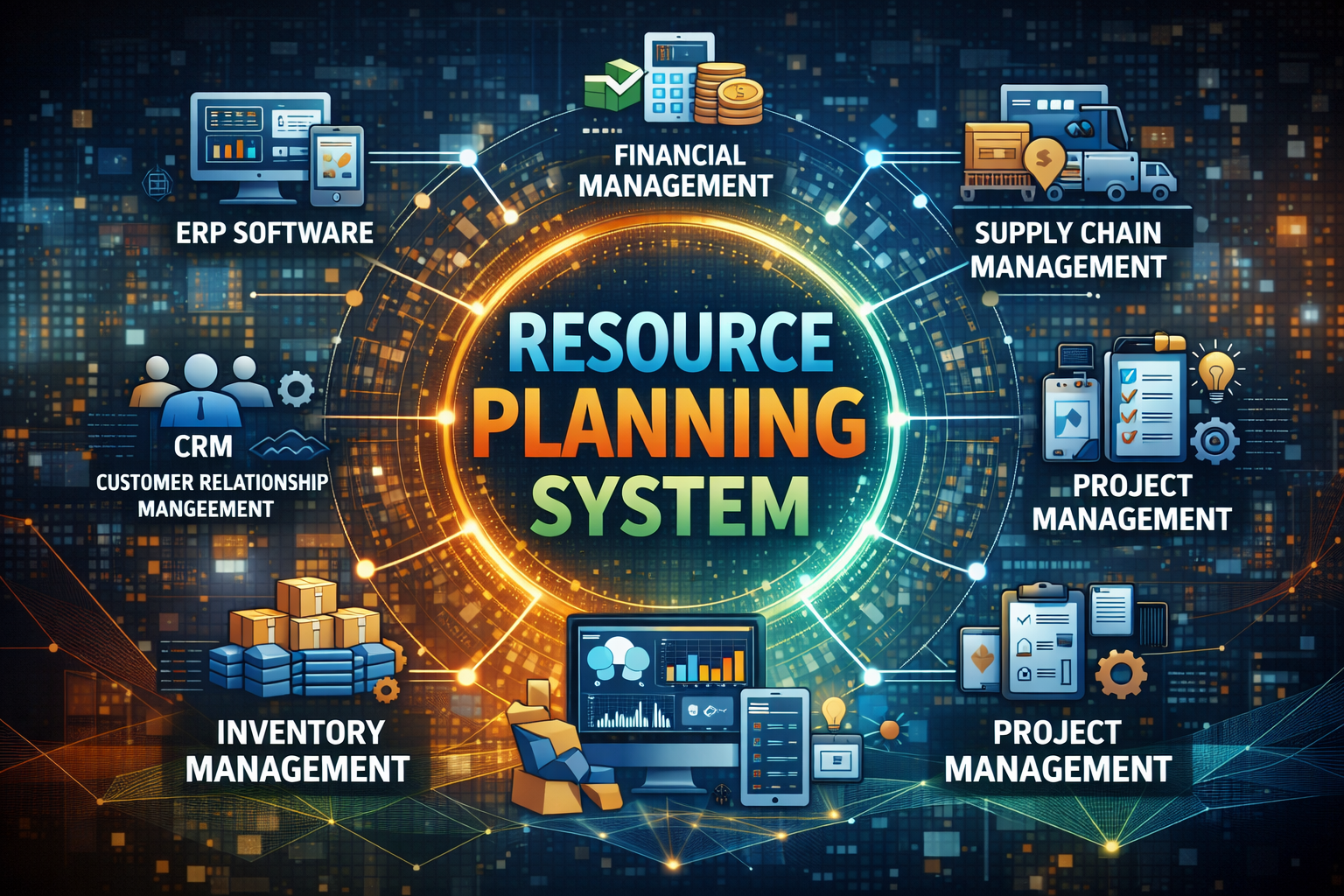
Resource Planning System: Organizations today operate in an environment defined by complexity, competition, and constant change. Managing people, finances, materials, and operations without a centralized framework can lead to inefficiencies, errors, and missed opportunities. This is why the resource planning system has become a foundational component of modern business management.
This comprehensive guide explains what a resource planning system is, how it works, why it matters in 2026, and how organizations can evaluate and implement one effectively. The article is designed to serve business leaders, managers, IT professionals, and analysts seeking a clear, reliable, and practical understanding of resource planning systems.
Disclaimer: This article is intended for general informational and educational purposes only. It does not constitute financial, legal, or operational advice. Organizations should consult qualified professionals before selecting or implementing a resource planning system.
Table of Contents
What Is a Resource Planning System?
A resource planning system is a centralized software platform that helps organizations plan, allocate, monitor, and optimize their resources. These resources typically include:
- Financial capital
- Human resources
- Materials and inventory
- Equipment and production capacity
- Time and project workloads
The primary goal of a resource planning system is to ensure that resources are used efficiently, aligned with business objectives, and available when and where they are needed.
In many organizations, the term is closely associated with enterprise resource planning (ERP), but resource planning systems can also exist as standalone or modular solutions focused on specific areas such as workforce planning, project management, or capacity planning.
Why Resource Planning Systems Matter in 2026
Business conditions in 2026 demand greater accuracy, speed, and flexibility than ever before. Several trends have increased the importance of resource planning systems.
1. Increasing Operational Complexity
Organizations now manage distributed teams, global supply chains, and multiple business units. Without centralized planning, resource conflicts and inefficiencies become common.
2. Data-Driven Decision-Making
Executives expect real-time insights into how resources are performing. Resource planning systems provide structured data that supports informed decision-making.
3. Cost Control and Efficiency
Rising labor, material, and operational costs have made efficient resource utilization a strategic priority.
4. Agility and Responsiveness
Modern markets require organizations to respond quickly to changes in demand, staffing, and supply availability. Resource planning systems enable faster adjustments.
Core Functions of a Resource Planning System
While features vary by vendor and use case, most resource planning systems share several core functions.
1. Resource Allocation and Scheduling
At the heart of any resource planning system is the ability to allocate resources effectively.
Key capabilities include:
- Assigning people to tasks or projects
- Scheduling equipment and facilities
- Balancing workloads across teams
- Avoiding resource conflicts and bottlenecks
Effective allocation ensures that critical activities are properly staffed and supported.
2. Capacity Planning
Capacity planning helps organizations understand how much work they can realistically handle with available resources.
This includes:
- Workforce capacity analysis
- Production and equipment capacity planning
- Scenario modeling for demand changes
Capacity planning supports both short-term operations and long-term strategic planning.
3. Financial Planning and Budgeting
Many resource planning systems integrate financial data to ensure resource decisions align with budget constraints.
Common features include:
- Cost tracking by resource or project
- Budget forecasting
- Variance analysis
- Financial impact modeling
This integration helps organizations control costs and improve financial accountability.
4. Project and Work Management
For project-based organizations, resource planning systems play a critical role in execution.
Typical capabilities include:
- Project timelines and milestones
- Resource assignment and utilization tracking
- Progress monitoring
- Performance reporting
This visibility helps project managers deliver work on time and within budget.
5. Reporting and Analytics
Modern resource planning systems provide reporting tools that turn raw data into actionable insights.
Examples include:
- Resource utilization reports
- Forecast vs. actual analysis
- Productivity and efficiency metrics
- Executive dashboards
These insights support continuous improvement and strategic alignment.
Types of Resource Planning Systems
Resource planning systems come in several forms, depending on organizational needs.
Enterprise Resource Planning (ERP) Systems
ERP platforms provide comprehensive resource planning across the entire organization, including finance, HR, supply chain, and operations.
Best for: Large and mid-sized enterprises seeking unified planning and control.
Workforce Resource Planning Systems
These systems focus on planning and optimizing human resources.
Common use cases include:
- Staffing and scheduling
- Skills and competency planning
- Workforce forecasting
Best for: Service-based organizations and labor-intensive industries.
Project Resource Planning Systems
Designed for project-centric environments, these systems emphasize project timelines and resource utilization.
Best for: Professional services, construction, engineering, and IT consulting firms.
Supply Chain and Production Planning Systems
These systems focus on material, inventory, and production resource planning.
Best for: Manufacturing, retail, and distribution organizations.

Key Benefits of a Resource Planning System
Organizations that implement effective resource planning systems experience benefits across multiple dimensions.
Operational Benefits
- Improved resource utilization
- Reduced scheduling conflicts
- Better workload balance
- Increased productivity
Financial Benefits
- More accurate budgeting and forecasting
- Reduced operational waste
- Improved cost visibility
- Better return on investment
Strategic Benefits
- Enhanced decision-making
- Greater organizational agility
- Improved alignment with business goals
- Increased resilience during change
Resource Planning System vs Traditional Planning Methods
Many organizations still rely on spreadsheets or disconnected tools for planning. While familiar, these methods have limitations.
Limitations of Traditional Planning
- Manual data entry and errors
- Limited real-time visibility
- Poor scalability
- Inconsistent data across teams
Advantages of Resource Planning Systems
- Centralized data and processes
- Real-time updates
- Automated calculations and reporting
- Scalable and repeatable planning
The transition from manual planning to a resource planning system often results in measurable efficiency gains.
Key Features to Look for in a Resource Planning System
Choosing the right system requires careful evaluation.
1. Scalability
The system should grow with the organization, supporting additional users, projects, and data volume.
2. Integration Capabilities
Look for integration with existing systems such as accounting, HR, CRM, and supply chain platforms.
3. User Experience and Accessibility
An intuitive interface improves adoption and reduces training requirements.
4. Customization and Flexibility
Different organizations have different planning needs. Configurable workflows and reports are important.
5. Security and Compliance
Ensure the system offers role-based access, data protection, and compliance support.
Common Challenges in Resource Planning System Implementation
Despite the benefits, implementation can present challenges.
1. Data Quality Issues
Inaccurate or incomplete data can undermine planning effectiveness.
Mitigation: Conduct data cleansing and validation before implementation.
2. Change Management
Employees may resist new processes or tools.
Mitigation: Provide training, communication, and stakeholder involvement.
3. Over-Complexity
Over-customization can increase costs and reduce usability.
Mitigation: Focus on core requirements and phased enhancements.
4. Alignment Across Departments
Resource planning requires collaboration across functions.
Mitigation: Establish clear governance and shared objectives.
Best Practices for Using a Resource Planning System
To maximize value, organizations should follow proven best practices.
Standardize Planning Processes
Consistent planning methodologies improve accuracy and comparability.
Monitor and Adjust Regularly
Resource planning is not a one-time activity. Continuous review ensures relevance.
Use Scenario Planning
Model different demand and capacity scenarios to prepare for uncertainty.
Align Planning with Strategy
Ensure resource decisions support long-term organizational goals.
Resource Planning System Use Cases by Industry
Manufacturing
- Production scheduling
- Material planning
- Capacity optimization
Professional Services
- Consultant allocation
- Project profitability tracking
- Skills-based planning
Healthcare
- Staff scheduling
- Equipment utilization
- Budget and cost control
Retail and Distribution
- Inventory planning
- Workforce scheduling
- Demand forecasting
Pros and Cons of Resource Planning Systems
Pros
- Centralized visibility of resources
- Improved planning accuracy
- Enhanced operational efficiency
- Better financial control
Cons
- Initial implementation effort
- Training requirements
- Dependence on data accuracy
FAQs About Resource Planning Systems
What is the difference between a resource planning system and ERP?
A resource planning system focuses specifically on planning and optimizing resources, while ERP systems provide broader functionality that includes transactions, compliance, and enterprise-wide operations.
Are resource planning systems suitable for small businesses?
Yes. Many modern systems are modular and scalable, making them suitable for small and mid-sized organizations.
How long does it take to implement a resource planning system?
Implementation timelines vary from a few weeks for simple deployments to several months for enterprise-scale systems.
Can resource planning systems support remote teams?
Yes. Cloud-based systems provide real-time access and collaboration for distributed teams.
How do resource planning systems improve decision-making?
They provide accurate, real-time data and analytics that support informed, timely decisions.
Future Trends in Resource Planning Systems
Resource planning systems continue to evolve alongside business needs.
Emerging Trends in 2026
- Greater use of real-time analytics
- Increased automation of routine planning tasks
- Deeper integration across business systems
- Enhanced scenario and capacity modeling
Organizations adopting modern resource planning systems are better prepared for uncertainty and growth.
Conclusion: Why a Resource Planning System Is Essential for Modern Organizations
A resource planning system is no longer a luxury—it is a strategic necessity. By providing visibility, structure, and insight into how resources are allocated and used, these systems help organizations operate more efficiently and adapt more effectively to change.
Key Takeaways
- Resource planning systems centralize and optimize resource usage
- They support better operational, financial, and strategic decisions
- Successful implementation requires clear goals, quality data, and change management
For organizations seeking sustainable growth, improved efficiency, and better control over their operations, a well-implemented resource planning system provides a strong foundation for long-term success.