
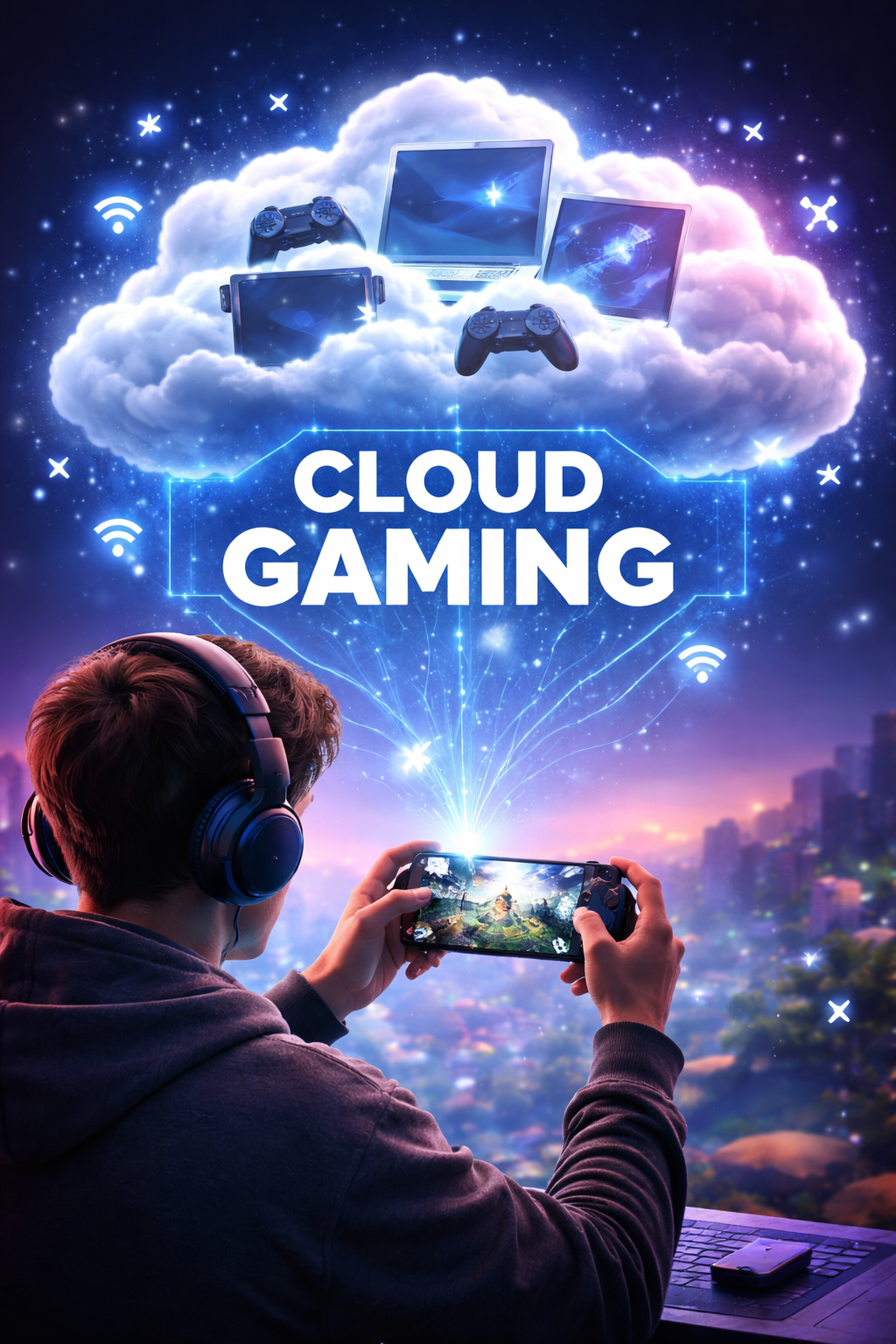
Cloud gaming has rapidly evolved from a niche experiment into a serious segment of the global gaming industry. Instead of relying on expensive consoles or high-end gaming PCs, cloud gaming allows users to stream games directly from powerful remote servers to everyday devices such as smartphones, laptops, smart TVs, and tablets. With improvements in internet infrastructure, data centers, and streaming technology, cloud gaming is increasingly viewed as a practical alternative to traditional gaming hardware.
As internet speeds improve and subscription-based digital services become more common, cloud gaming continues to gain traction among casual players, competitive gamers, and even developers. This article provides a comprehensive, current-year-focused overview of cloud gaming, explaining how it works, its advantages and limitations, leading platforms, technical requirements, real-world use cases, and what the future may hold.
This guide is designed to help readers understand cloud gaming clearly and objectively—whether you are new to gaming, considering switching platforms, or simply want to stay informed about emerging technology trends.
Table of Contents
What Is Cloud Gaming?
Cloud gaming, sometimes referred to as game streaming, is a method of playing video games where the game runs on remote servers rather than on a local device. The gameplay video is streamed over the internet to the user’s screen, while player inputs are sent back to the server in real time.
In simple terms:
- The game is processed in a data center
- The video output is streamed to your device
- Your controller or keyboard inputs are transmitted back instantly
This model is similar to how video streaming services work, but with the added challenge of real-time interaction.
How Cloud Gaming Works
Understanding how cloud gaming functions helps explain both its benefits and its limitations.
Core Technology Components
Cloud gaming relies on several key technologies working together:
- High-performance servers that run modern games
- Graphics processing units (GPUs) capable of rendering complex visuals
- Low-latency video streaming technology
- Fast and stable internet connections
When you start a cloud gaming session, a virtual gaming machine is allocated to you in a nearby data center. The game runs there, not on your device.
Input, Processing, and Output
- You press a button or move a joystick
- The input is sent to the server
- The server processes the action
- Updated visuals are streamed back to your screen
This entire cycle happens many times per second, which is why latency is such a critical factor in cloud gaming performance.
Why Cloud Gaming Is Gaining Popularity
Cloud gaming addresses several long-standing barriers in the gaming world.
Reduced Hardware Costs
Traditional gaming often requires:
- Expensive consoles
- High-end PCs with frequent upgrades
Cloud gaming reduces or eliminates these costs by shifting hardware requirements to the service provider.
Device Flexibility
With cloud gaming, users can play on:
- Smartphones
- Tablets
- Low-end laptops
- Smart TVs
This flexibility appeals to users who want to play across multiple devices without repurchasing hardware.
Instant Access to Games
Many cloud gaming platforms allow players to:
- Start games instantly
- Avoid large downloads or updates
- Access large libraries through subscriptions
This convenience aligns with modern digital consumption habits.
Internet Requirements for Cloud Gaming
Speed vs. Stability
While download speed matters, connection stability and latency are often more important.
Typical requirements include:
- Moderate to high broadband speeds
- Low ping times
- Minimal packet loss
A stable wired or high-quality wireless connection generally delivers better results than fluctuating mobile data.
Data Usage Considerations
Cloud gaming can consume significant amounts of data because it continuously streams video.
Disclaimer: Data usage varies by resolution, frame rate, and session length. Users with data caps should review their internet plans carefully before using cloud gaming services extensively.
Cloud Gaming Platforms: An Overview
Several major companies now operate cloud gaming platforms, each with its own approach.
Platform Models
Cloud gaming services typically fall into one of three models:
- Subscription-based libraries
- Bring-your-own-game platforms
- Hybrid models combining purchases and subscriptions
Each model has advantages depending on user preferences and existing game libraries.
Key Features to Compare
When evaluating a cloud gaming service, users should consider:
- Supported devices
- Game library size
- Performance consistency
- Pricing structure
- Regional availability
Not all services are available in every country, and performance can vary by location.
Cloud Gaming vs Traditional Gaming
Performance Differences
Traditional gaming offers:
- Minimal latency
- Full offline play
- Hardware-level control
Cloud gaming prioritizes:
- Accessibility
- Convenience
- Hardware independence
For fast-paced competitive games, traditional setups may still offer an advantage.
Ownership and Access
Traditional gaming often involves owning:
- Physical discs
- Digital licenses tied to hardware
Cloud gaming shifts toward:
- Access-based models
- Subscription ecosystems
This difference affects long-term value perceptions among gamers.
Advantages of Cloud Gaming
Accessibility for New Players
Cloud gaming lowers the barrier to entry, making gaming more accessible to:
- Students
- Casual players
- Users in regions with limited hardware availability
No Hardware Maintenance
Users do not need to worry about:
- Driver updates
- Hardware failures
- Performance tuning
All maintenance is handled by the service provider.
Cross-Platform Play
Cloud gaming often supports:
- Seamless switching between devices
- Cross-platform game progression
This is particularly appealing for users who travel or game on the go.
Limitations and Challenges of Cloud Gaming
Latency Sensitivity
Even small delays can impact:
- Competitive shooters
- Fighting games
- Rhythm-based titles
Although technology has improved, latency remains one of cloud gaming’s biggest challenges.
Internet Dependency
Cloud gaming requires:
- Continuous internet access
- Reliable network performance
This makes it less suitable in areas with unstable connections.
Limited Offline Access
Unlike traditional gaming, cloud gaming typically does not support offline play.
Cloud Gaming for Casual vs Hardcore Gamers
Casual Gamers
Cloud gaming works especially well for:
- Story-driven games
- Strategy games
- Turn-based titles
These genres are generally more tolerant of minor latency.
Competitive and Hardcore Gamers
Players who prioritize:
- Frame-perfect timing
- Competitive rankings
- Custom hardware setups
May still prefer traditional gaming platforms.
Cloud Gaming and the Gaming Industry
Impact on Game Development
Cloud gaming influences how games are designed by:
- Reducing hardware fragmentation
- Allowing developers to target server-level performance
- Enabling more scalable experiences
Developers can potentially create more complex games without worrying about consumer hardware limitations.
Market Growth Trends
Industry analysts consistently report growth in:
- Cloud gaming subscriptions
- Infrastructure investment
- Cross-platform development
This suggests cloud gaming is becoming a permanent part of the gaming ecosystem rather than a short-term trend.
Cloud Gaming and Subscription Economics
Subscription Models Explained
Cloud gaming subscriptions may include:
- Access to a rotating game library
- Premium tiers for higher resolutions
- Add-on purchases
Users should review terms carefully to understand what is included.
Disclaimer: Subscription pricing and game availability change over time. Always check official service details before subscribing.
Security and Privacy Considerations
Cloud gaming providers manage:
- User accounts
- Payment information
- Gameplay data
Reputable platforms invest heavily in:
- Data encryption
- Account security
- Fraud prevention
Users should still follow best practices, such as using strong passwords and enabling available security features.
Cloud Gaming on Mobile Devices
Why Mobile Matters
Smartphones are one of the fastest-growing platforms for cloud gaming because:
- Most users already own capable devices
- Touch controls and controllers are widely supported
- High-speed mobile networks are expanding
Controller Support
Many cloud gaming services support:
- Bluetooth controllers
- Console-style gamepads
- Custom touch overlays
This improves gameplay quality compared to touch-only controls.
Cloud Gaming on Smart TVs and Living Rooms
Cloud gaming is increasingly available on:
- Smart TVs
- Streaming devices
This allows users to:
- Play without a console
- Access games directly from the TV interface
As smart TVs become more powerful, this use case continues to grow.
Cloud Gaming Pros and Cons
Pros
- No expensive gaming hardware required
- Play on multiple devices
- Instant access to games
- Reduced maintenance and updates
Cons
- Requires stable internet
- Latency can affect performance
- Ongoing subscription costs
- Limited offline functionality
Is Cloud Gaming Worth It?
The value of cloud gaming depends on individual needs.
Cloud Gaming Is a Good Fit If You:
- Want to avoid buying new hardware
- Play casually or moderately
- Value convenience and flexibility
Cloud Gaming May Not Be Ideal If You:
- Compete at a high level
- Have unreliable internet
- Prefer owning physical media
The Future of Cloud Gaming
Technological Improvements
Future developments are expected in:
- Network infrastructure
- Compression algorithms
- Edge computing
These improvements aim to reduce latency and improve visual quality.
Industry Adoption
As more publishers support cloud gaming, users may see:
- Larger libraries
- Better integration with existing ecosystems
- Expanded regional availability
Cloud gaming is likely to coexist with traditional gaming rather than replace it entirely.
Frequently Asked Questions (FAQs)
What devices support cloud gaming?
Cloud gaming works on smartphones, tablets, laptops, desktops, and some smart TVs, depending on the service.
Do I need a fast internet connection?
A stable connection is essential. Faster speeds and lower latency improve the experience.
Is cloud gaming expensive?
Costs vary by service and subscription tier. Some users save money by avoiding hardware purchases.
Can I play competitive games on cloud gaming?
It depends on the game and connection quality. Some competitive players prefer local hardware.
Is cloud gaming safe?
Reputable providers implement strong security measures, but users should follow standard account safety practices.
Key Takeaways: Understanding Cloud Gaming
Cloud gaming represents a significant shift in how games are accessed and played. By removing hardware barriers and emphasizing accessibility, it opens gaming to a broader audience while introducing new challenges related to internet dependence and latency.
For many users, cloud gaming offers a convenient and cost-effective way to enjoy modern games. For others, especially competitive players, traditional gaming remains the preferred choice. As technology continues to advance, cloud gaming is expected to become more reliable, more widely available, and more deeply integrated into the global gaming ecosystem.
Ultimately, cloud gaming is not about replacing existing platforms—it is about expanding options and redefining how and where people play games.