Data Governance Services: A Complete Guide to Managing, Protecting, and Trusting Enterprise Data in 2026
Data Governance Services: Data has become one of the most valuable assets for modern organizations. From customer insights and operational metrics to regulatory reporting and strategic planning, business decisions increasingly depend on data quality, availability, and trust. As data volumes grow and regulations become stricter, organizations can no longer manage data informally. This has led to rising demand for data governance services.
This in-depth guide explains what data governance services are, why they matter in 2026, how they work, and how organizations can evaluate and adopt them responsibly. It is written for executives, data leaders, compliance professionals, and IT teams seeking reliable, practical, and up-to-date guidance.
Disclaimer: This article is for general informational and educational purposes only. It does not constitute legal, regulatory, or compliance advice. Organizations should consult qualified legal, data protection, or governance professionals before implementing data governance programs or services.
What Are Data Governance Services?
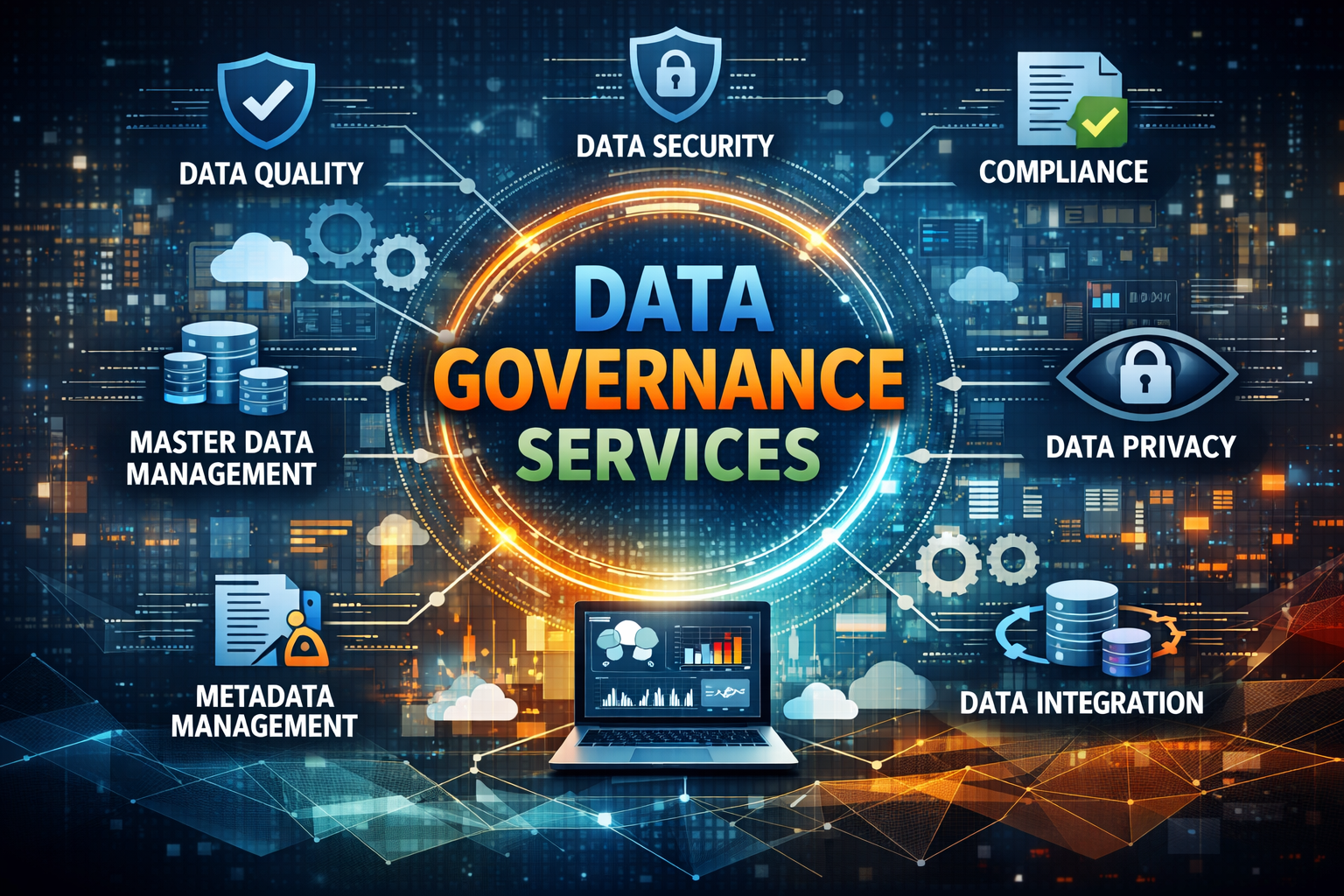
Data governance services are professional offerings designed to help organizations define, implement, manage, and sustain frameworks that ensure data is accurate, secure, compliant, and used responsibly. These services combine strategy, policies, processes, technology, and organizational roles to govern data across its entire lifecycle.
Unlike standalone tools, data governance services focus on aligning people, processes, and technology to create consistent and trustworthy data practices across the enterprise.
Core Objectives of Data Governance Services
- Ensure data quality and consistency
- Protect sensitive and regulated data
- Support regulatory compliance
- Enable trusted analytics and reporting
- Establish accountability for data ownership
Why Data Governance Services Matter in 2026
The importance of data governance has increased significantly due to several converging trends.
1. Growing Data Volumes and Complexity
Organizations now manage data across cloud platforms, data lakes, SaaS applications, and third-party partners. Without governance, data becomes fragmented and unreliable.
2. Stricter Data Privacy Regulations
Global regulations such as GDPR, CCPA/CPRA, HIPAA, and industry-specific standards require organizations to demonstrate control over personal and sensitive data.
3. Increased Use of Advanced Analytics
Modern analytics and reporting depend on high-quality, well-defined data. Poor governance undermines insight and decision-making.
4. Higher Business and Reputational Risk
Data breaches, misuse, and inaccurate reporting can result in financial penalties and long-term reputational damage.
Data governance services help organizations proactively manage these risks.
Key Components of Data Governance Services
Effective data governance services address multiple dimensions of data management
1. Data Governance Strategy and Framework Design
A strong governance program begins with a clear strategy.
Services in this area typically include:
- Governance maturity assessments
- Definition of governance goals and scope
- Development of governance operating models
- Alignment with business objectives
This ensures governance efforts are practical and business-focused.
2. Data Policies and Standards
Policies define how data should be created, used, stored, and retired.
Common policy areas include:
- Data classification and handling
- Data privacy and protection
- Data retention and archiving
- Data access and usage rules
Clear policies provide consistency and reduce ambiguity across teams.
3. Data Ownership and Stewardship Models
Accountability is a cornerstone of data governance.
Data governance services help organizations define roles such as:
- Data owners
- Data stewards
- Data custodians
- Governance councils
These roles ensure data-related decisions have clear responsibility.
4. Data Quality Management
Data quality issues can undermine trust and analytics.
Governance services often include:
- Data quality assessments
- Definition of quality metrics
- Monitoring and remediation processes
- Root-cause analysis
This helps organizations maintain reliable and usable data.
5. Metadata Management and Data Cataloging
Metadata provides context about data.
Services in this area support:
- Business glossaries
- Data lineage documentation
- Data catalogs for discoverability
- Standardized definitions
Metadata management improves transparency and data literacy.
6. Privacy, Security, and Compliance Support
Data governance services play a critical role in compliance.
Typical capabilities include:
- Data mapping and inventory
- Privacy impact assessments
- Consent and access governance
- Audit and compliance reporting
This helps organizations demonstrate regulatory accountability.

Types of Data Governance Services
Data governance services can be delivered in different ways depending on organizational needs.
Advisory and Consulting Services
These services focus on strategy, design, and planning.
Best for: Organizations starting or redesigning governance programs.
Managed Data Governance Services
Managed services provide ongoing operational support.
Examples include:
- Governance program management
- Data quality monitoring
- Policy maintenance
Best for: Organizations with limited internal governance resources.
Technology-Enabled Governance Services
These services combine governance expertise with tools and platforms.
Common focus areas:
- Data catalogs and governance platforms
- Workflow automation
- Reporting and dashboards
Best for: Organizations seeking scalable, tool-supported governance.
Industry-Specific Data Governance Services
Some providers offer governance services tailored to regulated industries.
Examples:
- Healthcare data governance
- Financial services data governance
- Government and public sector governanceKey Benefits of Data Governance Services
Organizations that invest in data governance services realize benefits across operational, strategic, and risk dimensions.
Business Benefits
- Improved decision-making confidence
- Greater trust in analytics and reporting
- Better alignment between data and business goals
Operational Benefits
- Reduced data duplication and errors
- Improved data discoverability
- More efficient data management processes
Risk and Compliance Benefits
- Stronger privacy and security controls
- Reduced regulatory exposure
- Improved audit readiness
Data Governance Services vs. Data Management Services
While related, these services serve different purposes.
Data Management Services
- Focus on technical data handling
- Include data integration, storage, and pipelines
- Emphasize performance and availability
Data Governance Services
- Focus on rules, accountability, and trust
- Address data quality, ownership, and compliance
- Align data usage with business and regulatory expectations
Strong data governance enhances the effectiveness of data management.
Common Challenges Addressed by Data Governance Services
Organizations often turn to governance services to solve recurring problems.
Inconsistent Data Definitions
Different teams use different meanings for the same data.
Governance solution: Business glossaries and standardized definitions.
Poor Data Quality
Errors and inconsistencies reduce confidence.
Governance solution: Data quality frameworks and monitoring.
Lack of Accountability
No clear ownership for critical data.
Governance solution: Defined ownership and stewardship models.
Compliance Gaps
Difficulty demonstrating regulatory compliance.
Governance solution: Documented policies, controls, and audit trails.
How to Choose the Right Data Governance Services Provider
Selecting the right provider is critical to success.
1. Assess Governance Maturity
Understand whether your organization needs foundational strategy support or advanced optimization.
2. Evaluate Industry Experience
Providers with industry-specific expertise understand regulatory and operational nuances.
3. Review Methodologies and Frameworks
Look for structured, proven governance approaches rather than ad hoc methods.
4. Consider Technology Alignment
Ensure services align with your existing data platforms and tools.
5. Focus on Change Management
Successful governance requires cultural adoption, not just documentation.
Best Practices for Implementing Data Governance Services
Organizations that achieve sustainable governance follow proven practices.
Start with Clear Business Objectives
Tie governance efforts to measurable business outcomes.
Prioritize High-Value Data Domains
Focus first on data that drives critical decisions or regulatory reporting.
Engage Stakeholders Early
Involve business, IT, legal, and compliance teams from the start.
Build Governance Incrementally
Adopt a phased approach rather than attempting enterprise-wide governance all at once.
Measure and Communicate Progress
Use metrics to demonstrate value and build ongoing support.
Data Governance Services Use Cases by Industry
Financial Services
- Regulatory reporting accuracy
- Customer data privacy
- Risk and compliance governance
Healthcare and Life Sciences
- Patient data protection
- Clinical data quality
- Research and reporting governance
Retail and E-commerce
- Customer data management
- Product and pricing data consistency
- Marketing analytics governance
Manufacturing and Supply Chain
- Master data governance
- Supplier and product data quality
- Operational reporting consistency
Pros and Cons of Data Governance Services
Pros
- Improved data trust and quality
- Stronger compliance posture
- Clear accountability and ownership
- Scalable governance frameworks
Cons
- Requires organizational change
- Initial time and resource investment
- Benefits accrue over time rather than immediately

FAQs About Data Governance Services
What is the main goal of data governance services?
The primary goal is to ensure data is accurate, secure, compliant, and used responsibly across the organization.
Are data governance services only for large enterprises?
No. Mid-sized and growing organizations also benefit, especially as data volumes and regulatory requirements increase.
How long does it take to see value from data governance services?
Some benefits, such as improved clarity and accountability, appear quickly. Broader value typically emerges over several months as practices mature.
Do data governance services require new technology?
Not always. Many services focus on processes and roles first, then introduce tools where needed.
How do data governance services support analytics?
They improve data quality, consistency, and definitions, which increases trust in analytics and reporting.
Future Trends in Data Governance Services
Data governance continues to evolve alongside data and regulatory landscapes.
Key Trends in 2026
- Increased focus on privacy-by-design
- Greater integration with data platforms
- Stronger emphasis on data literacy
- Expanded governance for cloud and shared data environments
Organizations that invest in modern data governance services are better prepared for long-term data-driven growth.
Conclusion: Why Data Governance Services Are Essential for Modern Organizations
Data governance services provide the structure, discipline, and accountability needed to manage data as a strategic asset. As data becomes more central to decision-making and compliance, informal approaches are no longer sufficient.
Key Takeaways
- Data governance services align data usage with business and regulatory expectations
- They improve data quality, security, and trust
- Successful governance requires strategy, roles, processes, and ongoing commitment
For organizations seeking reliable analytics, regulatory confidence, and long-term data value, investing in data governance services is a critical step toward sustainable success.